
Super computers
Introduction
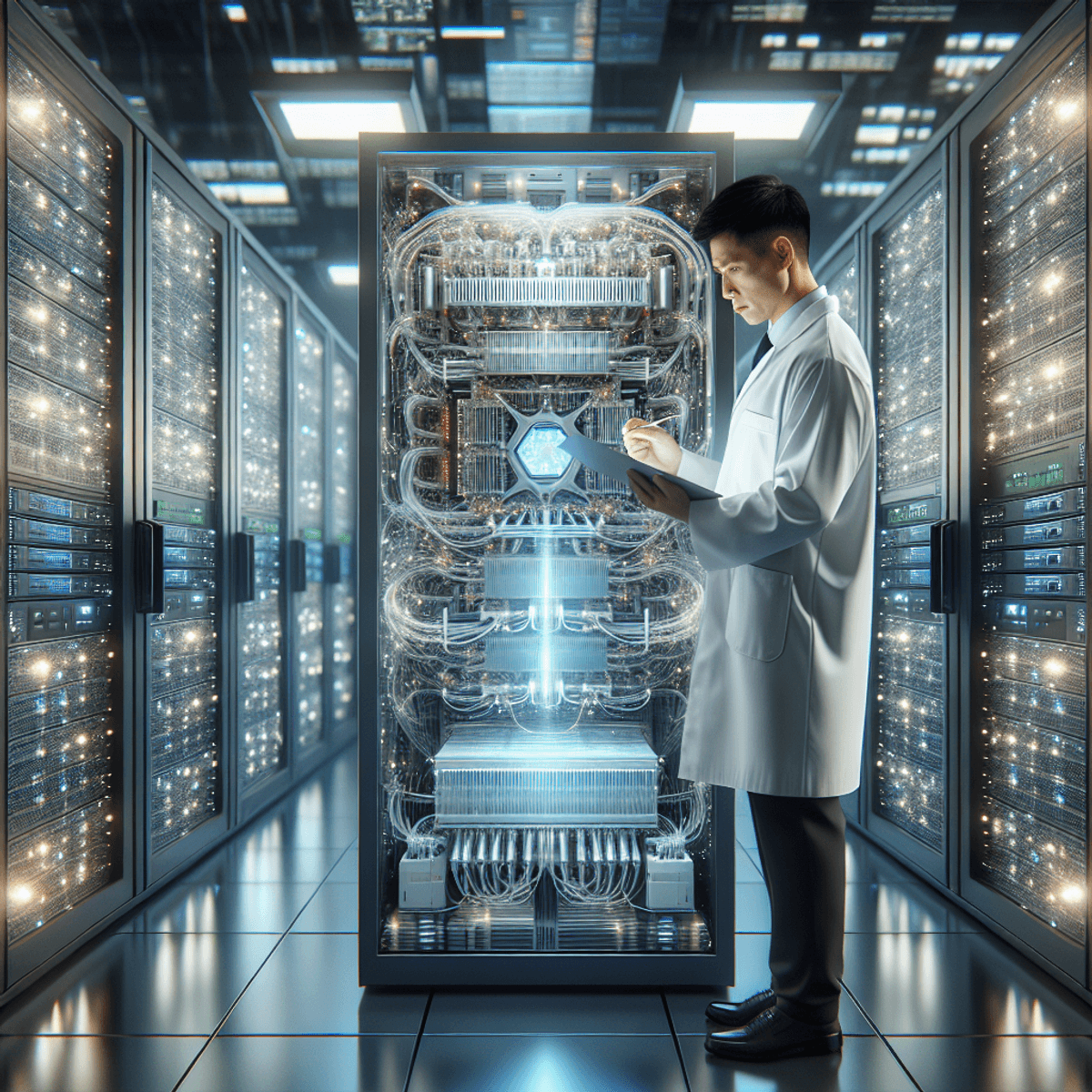
A supercomputer is a high-performance computing system designed to process vast amounts of data at extraordinary speeds. These machines are essential in tackling complex computational tasks that general-purpose computers cannot efficiently handle.
Supercomputers play a crucial role in modern technology, enabling:
- Enable scientific simulations and advanced modeling
- Support climate research and weather forecasting
- Facilitate national security applications, including nuclear weapons design
Supercomputers represent the pinnacle of computational power, driving innovations across various industries.
This article explores the history, architecture, notable achievements, applications, challenges, and future trends in supercomputing. You will gain insights into how these powerful systems shape our understanding of the world and address pressing global issues.
History of Supercomputers
The evolution of supercomputers can be traced back to influential figures and groundbreaking machines.
1. Pioneers in Supercomputing
Seymour Cray is often regarded as the father of supercomputing. His company, Cray Research, became synonymous with high-performance computing during the 1970s and 1980s. Cray’s innovative designs set the stage for future advancements.
2. Development of Early Models
The CDC 6600, launched in 1964, is recognized as the first true supercomputer. It introduced a revolutionary architecture that allowed multiple operations to occur simultaneously, achieving unprecedented speeds. Following this, the Cray-1, released in 1976, became the world's first commercially successful supercomputer, boasting capabilities that outperformed its predecessors.
3. Innovations Introduced
Key innovations during this period included vector processing, which enabled processors to handle large data sets efficiently. This technology broke existing speed barriers, paving the way for future developments in computational power.
These milestones established the foundation upon which modern supercomputing continues to build, enabling increasingly complex scientific research and technological advancements.
Architecture and Technology Behind Supercomputers
Supercomputers are characterized by their massively parallel computing architecture, which enables them to handle extensive computations efficiently. Their structure primarily consists of:
- Processors: Hundreds or thousands of processors work simultaneously on different parts of a problem.
- Nodes: Each node contains multiple processors, memory, and storage, allowing them to communicate through high-speed networks.
The performance of supercomputers is measured in floating-point operations per second (FLOPS). This metric quantifies their ability to perform calculations with decimal numbers rapidly. Understanding FLOPS is crucial when comparing the computational power of different supercomputers. For instance, systems that achieve petaflops are capable of performing quadrillions of calculations per second, while exascale computers can surpass quintillions.
Advances in architecture have evolved significantly over the decades:
- The introduction of vector processing allowed for the execution of operations on entire arrays rather than individual data points, greatly enhancing speed.
- Modern supercomputers often integrate commodity hardware components, leveraging open-source operating systems like Linux for increased flexibility and cost-effectiveness.
These architectural innovations continue to push the boundaries of what supercomputers can achieve, enabling breakthroughs across various scientific fields.
Notable Supercomputers and Their Achievements in the TOP500 Rankings
Supercomputers have achieved remarkable milestones, with several notable machines standing out in performance rankings. Key examples include:
1. ASCI Red
Launched in 1997, this supercomputer was the first to reach a peak performance of over 1 teraflop (one trillion floating-point operations per second). It played a crucial role in nuclear weapons simulations for the Los Alamos National Laboratory.
2. Blue Gene/L
Introduced by IBM in 2004, it marked a significant advancement in supercomputing, achieving a sustained performance of over 280 teraflops. Blue Gene/L was instrumental in scientific research, particularly in areas like genetic modeling and protein folding.
Current leaders in performance include:
1. Frontier
As of 2023, Frontier has surpassed exascale computing capabilities, achieving speeds exceeding 1.1 exaflops. This supercomputer is geared towards solving complex problems across various scientific disciplines.
2. Fugaku
Developed by RIKEN and Fujitsu, Fugaku previously held the title of the fastest supercomputer before Frontier. Its design emphasizes versatility and energy efficiency while delivering exceptional performance for diverse applications.
The TOP500 rankings provide an authoritative assessment of supercomputer performance globally. This list is updated biannually and serves as a benchmark for researchers and developers to gauge advancements and innovations in supercomputing technology.
Applications of Supercomputers Across Various Industries
Supercomputers play a crucial role in various industries, transforming our approach to complex problems. Their immense computing power allows us to:
1. Conduct Scientific Simulations and Complex Calculations
Supercomputers are essential for running simulations that model intricate phenomena. They help us understand molecular interactions, simulate material behavior at atomic levels, and predict outcomes in scientific experiments.
2. Improve Weather Forecasting and Climate Modeling
Weather forecasting has greatly benefited from supercomputing capabilities. These systems analyze large amounts of data from satellites and sensors, enabling accurate predictions of weather patterns. Climate models also rely on supercomputers to simulate future climate scenarios, aiding scientists in assessing the potential impacts of climate change.
3. Support National Security through Nuclear Weapons Design
Supercomputers play a critical role in national defense strategies, particularly in nuclear weapons design and testing. They assist in simulating the effects of nuclear explosions, ensuring safety and compliance with treaties without actual detonations. This capability allows for thorough analysis while safeguarding national security interests.
The impact of supercomputers goes beyond these areas, showcasing their importance in fostering innovation and making informed decisions across industries. Their ability to handle exascale computing further expands their potential applications, promising even more advancements in the future.
The Evolution Towards Exascale Computing and Its Challenges
Exascale computing refers to systems capable of performing at least one exaflop, or (10^{18}) floating-point operations per second. This level of performance is significant as it enables the processing of complex simulations and analyses that were previously unimaginable, pushing boundaries in fields such as climate modeling, genomics, and astrophysics.
Transition from Petascale to Exascale Systems
Petascale systems, achieving (10^{15}) FLOPS, marked a major leap in supercomputing capabilities.
As researchers transitioned to exascale systems, they faced numerous challenges, including:
- Energy efficiency: Power consumption becomes critical as performance scales up.
- Data management: Handling vast datasets generated by exascale computations requires innovative solutions.
- Software optimization: Existing applications must be restructured to fully leverage the capabilities of exascale architectures.
The journey towards exascale computing is not just about speed; it embodies a shift in how complex problems can be tackled across various scientific domains.
Future Trends in Supercomputing: Quantum Computers, AI Supercomputers, and Energy Efficiency
1. Quantum Computers
These revolutionary systems leverage the principles of quantum mechanics to process information in ways that classical supercomputers cannot. Quantum bits, or qubits, allow for complex calculations at unprecedented speeds. Their potential applications include optimizing logistics, drug discovery, and solving intricate mathematical problems.
2. AI Supercomputers
Modern supercomputers are increasingly incorporating artificial intelligence to enhance performance and efficiency. AI-driven systems can analyze vast datasets rapidly, enabling advancements in areas such as personalized medicine, autonomous vehicles, and climate forecasting. These systems adaptively learn from data, improving accuracy over time.
3. Energy Efficiency
As supercomputing demands grow, so does the focus on energy consumption. Innovations in chip design and cooling technologies are critical for reducing the carbon footprint of these powerful machines. Energy-efficient architectures not only save costs but also promote sustainability in high-performance computing environments.
These trends show the exciting trajectory of supercomputing technology and its integration with emerging fields.
Conclusion
Supercomputers have a significant impact on industries, changing the way we tackle complex problems. They are driving progress in:
- Scientific research: Making simulations and data analysis easier.
- Weather forecasting: Improving accuracy in climate modeling.
- National security: Assisting with important tasks like designing nuclear weapons.
As technology continues to evolve, supercomputers' potential keeps growing. To learn more about their ability to bring about change and what lies ahead, delve deeper into this captivating field. Understanding supercomputing not only educates but also sparks creativity in different industries.


